

![[Article] Video Marketing Statistics 2026: What the Data Says About AI Video](https://pictory.ai/wp-content/uploads/2026/06/video-marketing-statistics-2026.webp)
TL;DR
Video marketing statistics for 2026 show near-universal adoption: 91% of businesses use video, 93% of marketers say it’s important to their strategy, and short-form video ranks as the highest-ROI content format for the third year running. AI tools have cut production costs by up to 91%, making consistent video output realistic for teams without dedicated editors. This page collects the numbers that matter most.
If you need data to plan, defend, or expand your video budget for 2026, this page has the numbers. We’ve pulled together the most reliable video marketing statistics for 2026, covering adoption, ROI, format performance, AI tooling, consumer expectations, and platform benchmarks. The sources are linked inline so you can verify each stat and drop them into internal decks. Start with the headline numbers, then dig into the breakdowns that match your work. Tools like Pictory’s URL to Video and script workflows are referenced where they address the production gap the data describes.
How many businesses use video marketing in 2026?
Ninety-one percent of businesses use video marketing in 2026, tied for an all-time high in Wyzowl’s annual State of Video Marketing report. 93% of marketers say video is an important part of their strategy, according to HubSpot’s 2026 State of Marketing data. 37% plan to increase video investment this year, with short-form taking the largest share of new budget.
The adoption curve has been steep but predictable. Video moved from “nice to have” to “core channel” between 2019 and 2023, and from “core channel” to assumed by 2026. Teams skipping video now aren’t being cautious. They’re just behind.
What changed in 2026 is expectation, not adoption. Consumers and platforms both expect more video, in more formats, more frequently.
What ROI does video marketing deliver?
Eighty-two percent of video marketers report a good ROI from video, according to Wyzowl’s 2026 survey. 88% say video has helped them increase sales and leads. Businesses using video grow revenue 49% faster than those that don’t.
One number bucks the trend. Wyzowl’s 2026 figure of 82% is down from 93% the year before. The most plausible reason: more teams producing video means more teams producing poor video, which pulls the average down. Teams with an actual strategy still report strong returns.
Landing pages with embedded video can see conversion increases of up to 86%, and pages with video achieve 4.8% average conversion versus 2.9% without. Rocketium / WebFX data
Video is a conversion lever, not just an engagement format. If your landing pages and product pages don’t have video, you’re leaving money on the table — the data is pretty clear on that.

Which video format gets the highest engagement?
Short-form video, content under 60 seconds, gets the highest engagement of any format in 2026. Videos under 60 seconds generate 2.5x more engagement per impression than any other content type. 71% of marketers rate the 30-second to two-minute window as the most effective length range for marketing video.
Engagement drops sharply as videos get longer. Videos under 60 seconds achieve a 50% engagement rate, while videos over 60 minutes drop to 17%. The pattern holds across platforms, though the optimal length varies. TikTok’s sweet spot sits around 21 to 34 seconds. YouTube Shorts performs best at 30 to 60 seconds. LinkedIn video peaks at 30 to 90 seconds.
For content planning, that’s a simple conclusion. Teams publishing short-form consistently beat teams that post occasionally and long. Watch time follows format.
How are AI tools changing video marketing output?
AI tools cut production time by 50 to 80% and reduce per-video cost by up to 91%, letting lean teams ship video content consistently without hiring video specialists. 78% of marketing teams now use AI-generated video in at least one campaign per quarter, and AI-personalized video ads achieve click-through rates of 6 to 7%, compared to a 2% benchmark for standard video ads.
The biggest shift is workflow, not output quality. Scripting, scene selection, captions, voiceovers, platform formatting — AI handles most of this now. That frees up the human side of the team for creative direction, brand judgment, and deciding what actually gets made. Teams that divide the work this way produce up to 11 times more video per month without adding headcount. See the full Pictory Academy guide to creating branded video content at scale for a practical walkthrough of this workflow.
AI-generated CTAs and on-screen elements boost engagement by 20 to 25% on average, mostly because they can be tested and iterated faster than manual variants. Pictory’s script to video workflow is one example. For a broader view of where AI video is going, the 2026 AI video trends post covers the capabilities most teams should plan around next.
What do consumers expect from video content in 2026?
Eighty-four percent of consumers want to see more videos from brands in 2026, a figure that has held within an 8% range for eight years running. 96% have watched an explainer video to learn about a product or service. 85% say they’ve been convinced to buy a product or service after watching a video.
Quality matters more than ever. 89% of consumers say video quality affects their trust in a brand, down slightly from 91% last year. But “quality” here doesn’t mean high production values. It means intentional video. Bad captions, inconsistent branding, or footage that clearly wasn’t edited all damage trust faster in 2026 than they did in 2022.
73% of consumers prefer to watch a short-form video to learn about a product or service. That preference now shapes how product pages, help centers, and onboarding flows are designed. Brands that lead with video in these contexts convert better than brands that lead with text. Repurposing existing assets through a URL to video workflow is one of the fastest ways to close this gap. The Pictory Academy guide to creating marketing and ad videos shows exactly how to turn existing content into short-form assets quickly.
Platform-by-platform video marketing data
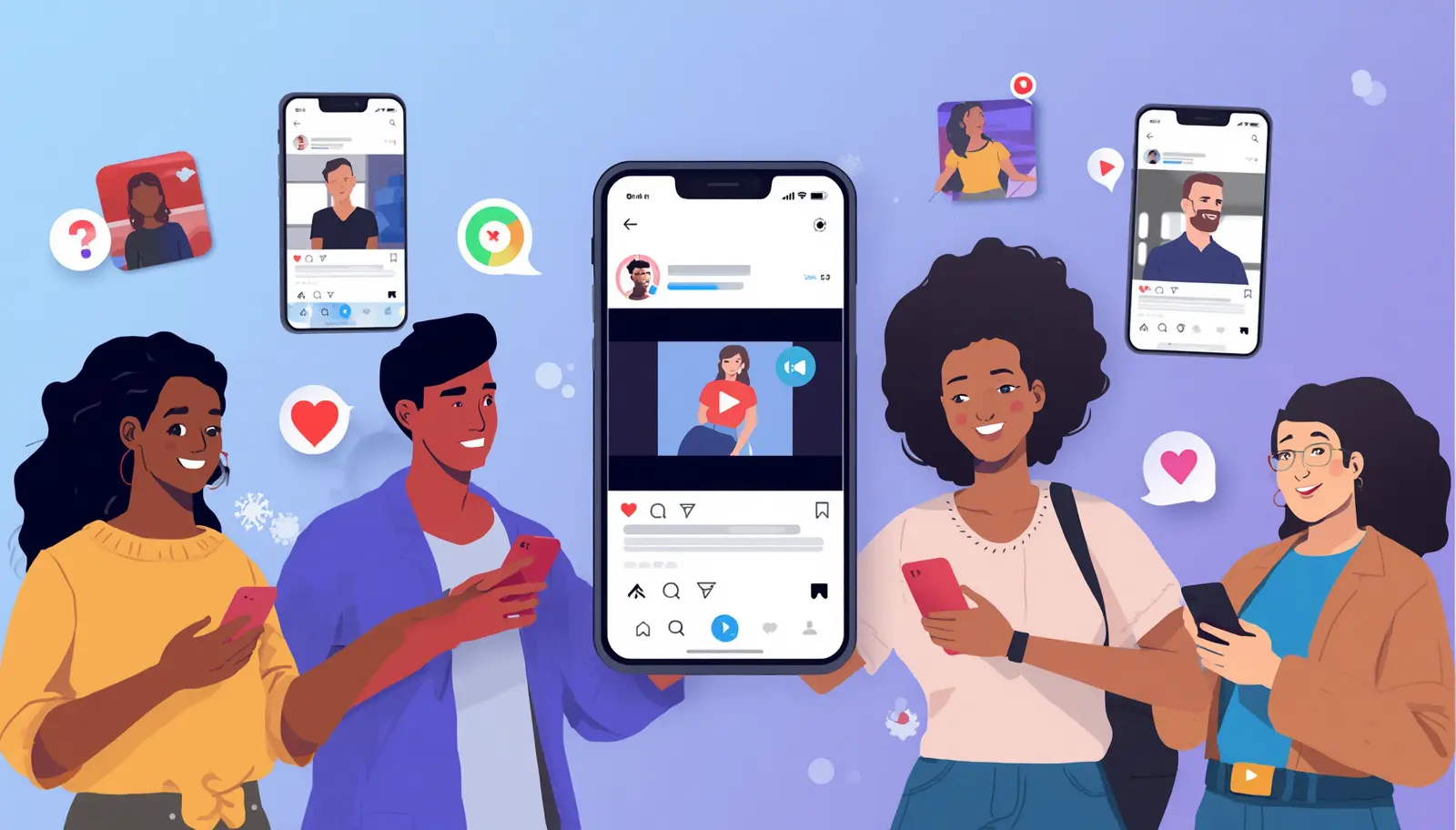
Each major platform has its own engagement profile and ROI signature. Knowing the numbers shapes where you invest first.
YouTube is the most-used platform, with 82% of video marketers active there. It’s the strongest combination of reach, SEO value, and longevity, which makes it the safest default for B2B and explainer content. Shorts now generate over 70 billion daily views and have shifted the platform’s content mix toward short-form.
LinkedIn has emerged as the strongest single B2B platform. LinkedIn video achieves a 5.6% average engagement rate and roughly 5x the engagement of non-video posts. Native video posts get 5.1 to 6% engagement compared to 2 to 3% for static image posts.
TikTok delivers the highest organic engagement rate at 3.73%, with US users spending over 24 hours per month inside the app. It’s the platform where trends emerge first, which makes it valuable for forecasting what will land on other channels three to six months later.
Instagram Reels accounts for 41% of all time spent on Instagram, and short-form ad budgets reflect that. 57% of marketing budgets now include a dedicated short-form line item, up from under 20% in 2022.
B2B video marketing: the numbers that move budgets
B2B video marketing generates measurable pipeline impact. Landing pages with embedded video can increase conversions by up to 86%, and LinkedIn video achieves 5.1 to 6% engagement versus 2 to 3% for static image posts. Video in email drives 9.1% conversion compared to 5.4% without, a 69% lift.
Video in sales outreach is one of the most underused channels in B2B. Sales emails with video doubled response rates compared to text-only emails in 2026. Testimonial videos rank third in ROI performance across B2B formats, behind only product demos and explainers.
93% of marketers now say video is important to their strategy, according to HubSpot’s 2026 data, and 37% plan to increase video investment in the year ahead. The trend is most pronounced inside B2B teams that have moved beyond webinars and case studies into shorter, more distribution-friendly formats. Enterprise teams should also review how enterprise companies are using AI video to benchmark adoption against peers.
Turn these stats into your first AI video
Start with a script, URL, or slide deck. No editing skills needed.
The verdict: how to use these statistics
If you’re using this page to plan or defend a 2026 video budget, focus on three numbers. 91% adoption (the table-stakes number, hard to argue against), 82% positive ROI (the credibility number, sourced from Wyzowl), and 86% conversion lift on video landing pages (the impact number, the one that closes the budget conversation). Most internal decks need a headline stat, a credibility stat, and an impact stat. These three give you all of them.
If you’re using this page to plan content, focus on format and platform data. Short-form under 60 seconds is the highest-ROI format and the only one whose engagement is still rising. YouTube and LinkedIn are the two safest platform investments for most B2B teams. TikTok matters for trend forecasting and reach, even if direct conversion is lower.
Where to start depends on where you are. If you’re producing under four videos a month, repurpose existing web content into video to build cadence. Four to 20 a month, focus on a platform-native distribution workflow. Above 20, audit quality against the engagement benchmarks on this page.
FAQ: Video Marketing Statistics 2026
What percentage of businesses use video marketing in 2026?
91% of businesses use video marketing in 2026, tied for an all-time high according to Wyzowl’s annual State of Video Marketing report. Of those, 93% of marketers say video is an important part of their strategy, and 37% plan to increase their video investment through the rest of 2026, with short-form taking the largest share of new spend.
What is the average ROI of video marketing in 2026?
82% of video marketers report a good ROI, according to Wyzowl’s 2026 data. Businesses using video also grow revenue 49% faster than those that don’t. The figures vary by quality. Teams producing consistent, well-targeted video outperform those producing occasional content with no clear strategy, which pulls the average down.
What video length performs best for marketing?
Videos between 30 seconds and two minutes deliver the highest engagement for most marketing use cases. 71% of marketers rate that range as most effective in Wyzowl’s 2026 data, and completion data shows videos under 60 seconds achieve a 50% engagement rate, versus 17% for content over 60 minutes.
How are AI tools affecting video marketing performance?
AI tools are cutting production costs by up to 91% and reducing production time by 50 to 80%, which means marketing teams can ship more video more consistently. Consistent volume matters. AI-personalized video ads achieve 6 to 7% click-through rates compared to a 2% benchmark, and teams using AI produce up to 11 times more content per month.
Which platform is best for B2B video marketing in 2026?
LinkedIn delivers the strongest results for B2B video, with an average engagement rate of 5.1 to 6% compared to 2 to 3% for static image posts and roughly 5x the engagement of non-video posts. YouTube remains the most widely used platform overall, with 82% of video marketers active there, offering the strongest combination of reach and search visibility.
![[Blog] - Training Video Cost & ROI: What It Actually Costs to Build a Program in 2026](https://pictory.ai/wp-content/uploads/2026/07/blog-training-video-cost-roi-2026-300x169.webp)