
PICTORY VIDEO TRANSLATION
Translate Videos From English to Italian
Turn an English video into a Italian version with a natural Italian voiceover, accurate subtitles and a script you can edit line by line. Pictory transcribes, translates and rebuilds your video in the browser — no dubbing studio, no re-shoot, no editing timeline.
Rated 4.7/5 on Capterra






Trusted by over 20,000 companies of all sizes
Italian is spoken by more than 65 million people in Italy, southern Switzerland, San Marino and Vatican City, with large communities in Argentina, the United States, Brazil and Australia. It is a concentrated market where one well-made version reaches nearly everyone. Italy also has one of the strongest dubbing traditions anywhere. Foreign film and television has been voiced in Italian since the 1930s, and Italian voice actors are public figures in their own right. That history sets a high bar: Italian audiences are used to hearing content in Italian, not reading it. Pictory produces an Italian voiceover and Italian subtitles from the same upload, so you can publish the version your audience expects rather than the one that is quickest to make.
KEY FEATURES
Everything your Italian version needs

Italian typically runs 15 to 25 percent longer than English, and short labels expand far more than that — the English word views becomes visualizzazioni, more than twice the length. Pictory lets you set maximum lines per caption, tighten any line that overruns the original timing, and restyle captions to your brand with accented vowels rendering cleanly throughout.
The translated script is editable text, not a locked output. Fix a product name, choose Lei over tu for a corporate audience, or shorten a phrase that runs past its scene — then regenerate. Voiceover and captions update around your edit. Apply a brand kit and your Italian version carries the same logo, colors, fonts and intro as the English original.
For a more detailed guide to how our translate function works, see our Academy articles. Translating a finished video into multiple languages walks through the whole flow. Translating a script with AI shows how to rewrite your script in the target language first, then generate the video from there.
Step 1
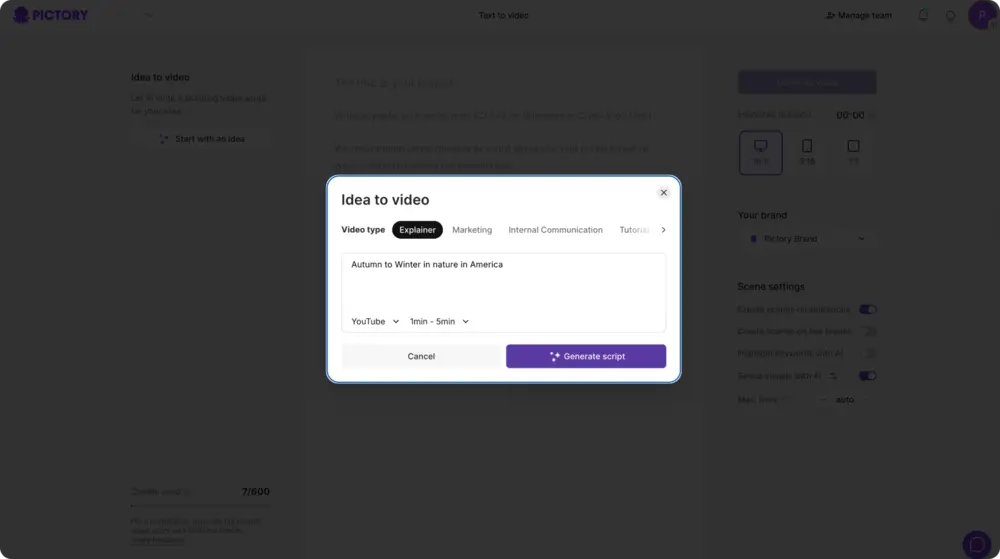
Upload or create your English video
Add a video or audio file, paste a URL, or start from a script or document. Pictory transcribes the English audio automatically.
Step 2
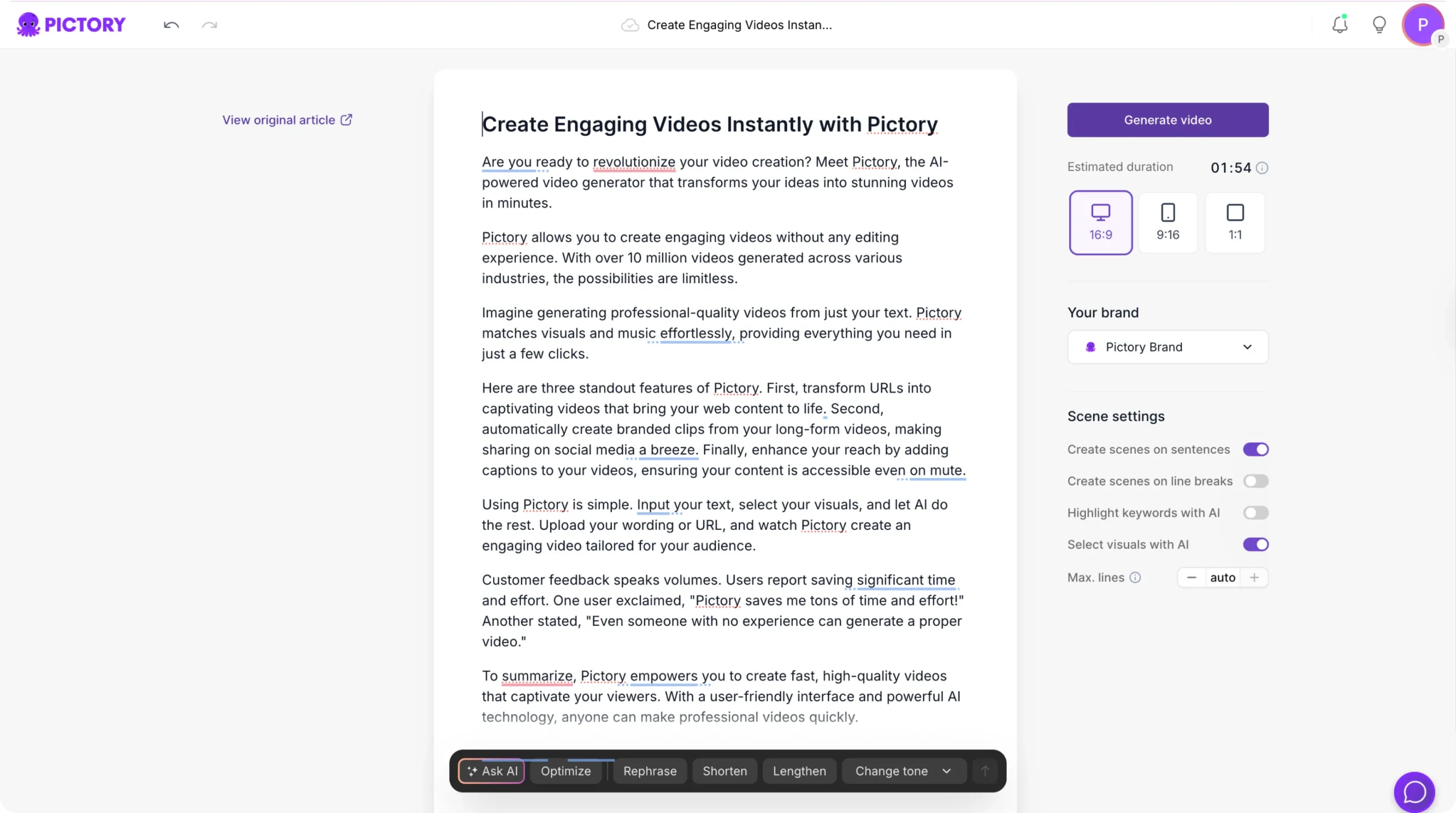
Translate the script to Italian
Translate the transcript into Italian and review it as editable text. Adjust register, lock brand terms, and tighten any line that runs long.
Step 3
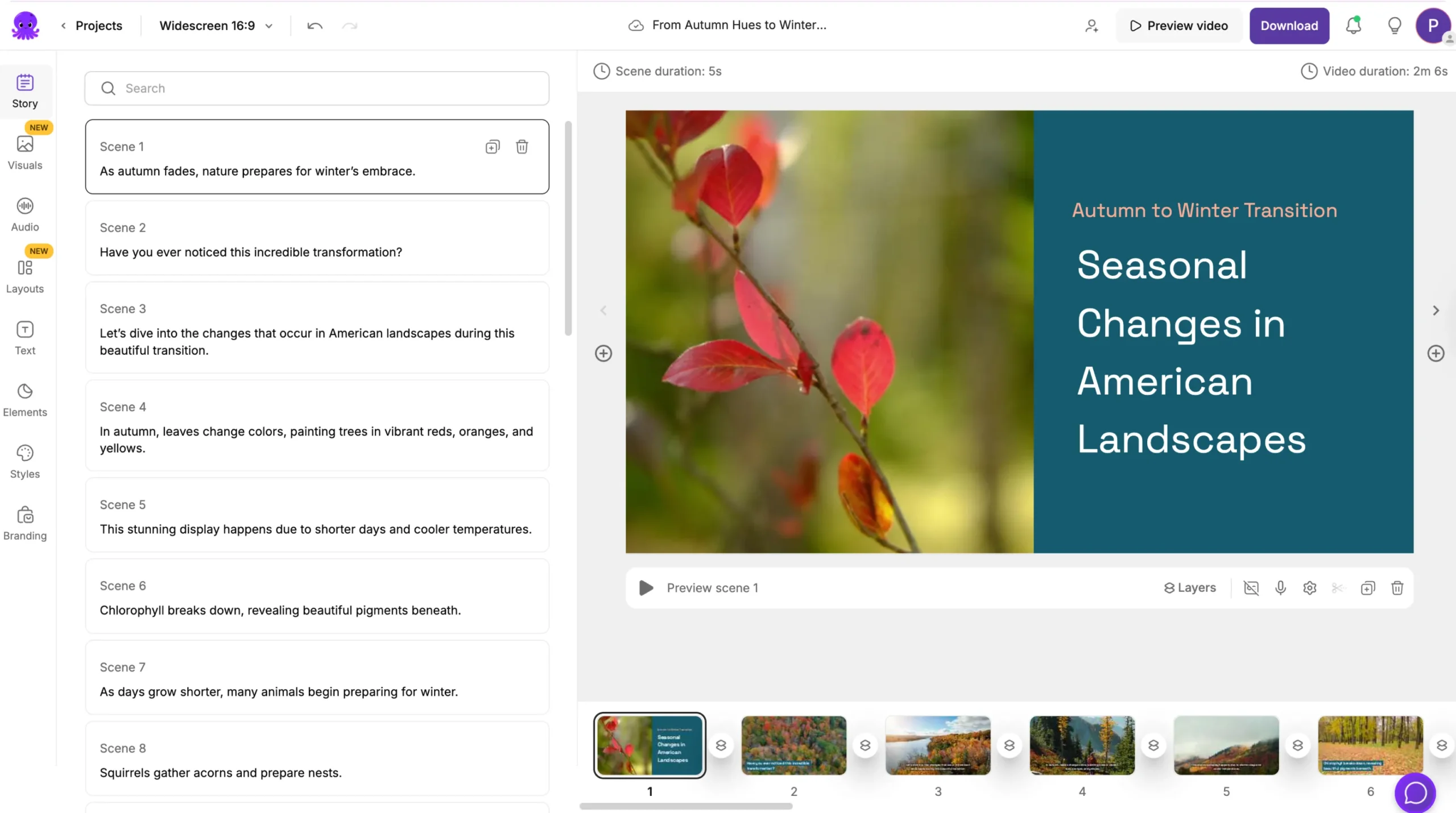
Add a Italian voice and subtitles
Select a Italian AI voice or apply your voice clone, then generate matching Italian subtitles and style them to your brand.

Step 4
Preview and export
Check timing across the whole video, then download your Italian cut and subtitle file, ready for YouTube, LinkedIn or your LMS.
Who translates English video to Italian

Training and L&D teams
Deliver onboarding and compliance modules to Italian teams with Italian narration, in a market where localized audio is the norm rather than a premium option.

Course creators
Open your catalogue to Italian students with Italian audio and captions, making lessons easier to follow and searchable in Italian at the same time.

Marketing and agency teams
Localize campaign video for the Italian market from one master asset, on brand, with terminology and tone adjusted for a dubbing-first audience.
Translate video into 18 languages
More than just a Video Translator
Explore Pictory's enhanced AI Video editing and video generation software, click below to explore all of the incredible features.
-
URL to Video
-
Audio to Video
-
AI Avatar Generator
-
AI Video Editor
-
PPT to Video
-
Image to Video
Text to Video Generator
Turn text, prompts, scripts, articles, and blog posts into videos using Gen AI visuals, AI avatars, captions, and realistic AI voices.
URL to Video
Audio to Video
AI Avatar Generator
AI Video Editor
PPT to Video
Image to Video
Publish your video in Italian today
Upload once, translate to Italian, and reach audiences across Italy, Switzerland and the Italian-speaking world — without a studio, a translator or a second shoot.
In partnership with










Frequently Asked Questions
How do I translate a video from English to Italian?
Upload your English video to Pictory, let it transcribe the audio, translate the transcript into Italian, then choose a Italian AI voice and generate matching subtitles. Review the Italian text before you export, then download the video and subtitle file.
Do Italian audiences prefer dubbing or subtitles?
Italy has dubbed foreign film and television since the 1930s and audiences are strongly accustomed to hearing content in Italian. An Italian voiceover generally meets expectations better than subtitles alone, though younger viewers on streaming platforms are increasingly comfortable with both. Pictory generates either from one upload.
Will the Italian translation fit my original timing?
Italian usually runs 15 to 25 percent longer than English, so lines can overrun without adjustment. Review the Italian transcript before you generate, shorten anything that runs past its scene, and set a maximum lines per caption so subtitles stay readable at the original pace.
Will the Italian version keep my own voice?
Yes. Create a voice clone from your own recordings and apply it to the translated script, and the Italian version is narrated in your voice rather than a stock one. Voice clones are multilingual, so the same clone works across every language you publish in.
How accurate is the English to Italian translation?
Accuracy is strong when the source audio is clean and clearly paced, and the translation is fully editable before you render. Review the Italian transcript, correct brand names or technical terms, and the voiceover and captions regenerate around your edits.
Can I translate a Italian video back into English?
Yes — the workflow runs in both directions from the same upload. Pictory transcribes the Italian audio, translates it to English, and generates an English voiceover and subtitles the same way.




SOC 2 & GDPR compliant
OPE0072201
Copyright 2026 Pictory.ai - Privacy Policy / Terms of Service / NSFW / Copyright Policy / Sitemap