


![[Article] - AI UGC: User-Generated-Style Ads Without Creators](https://pictory.ai/wp-content/uploads/2026/08/blog-ai-ugc.webp)
UGC-style ads outperform polished ones in most social feeds, and hiring creators for every variant is slow and expensive. AI UGC promises the format without the roster, and it delivers, with one important limit that most articles on this subject skip entirely. Pictory builds the vertical, captioned variants in one editor, so you can test 20 angles in an afternoon instead of waiting on a shoot. Here is what is legitimate, what is not, and how to produce it.
TL;DR
AI UGC is ad creative made to look like an organic social post rather than a produced advert. The style is legitimate and it works. Presenting a synthetic person as a real customer is not, and since 2024 it carries civil penalties in the US. The line is testimonial versus format.
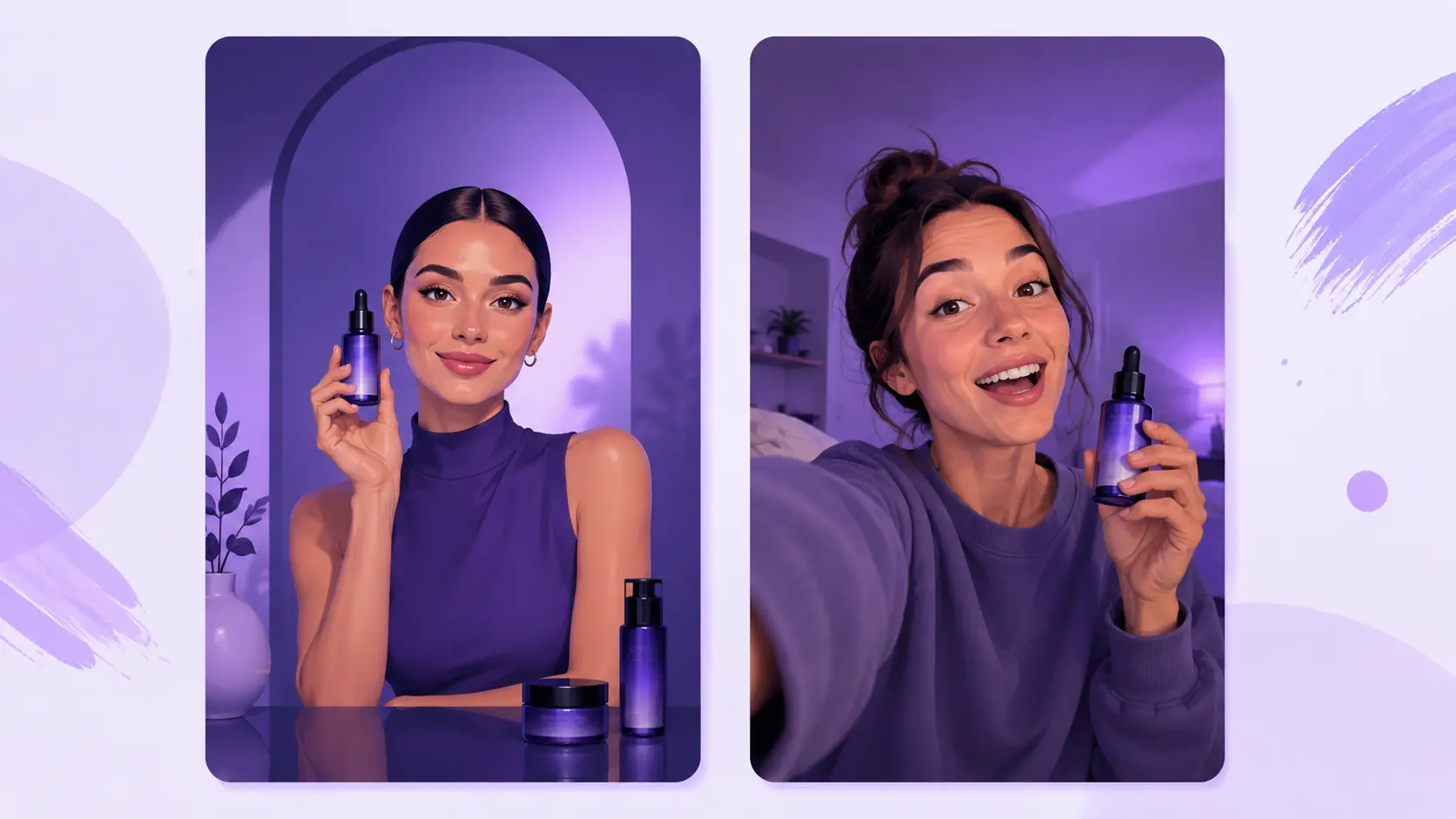
AI UGC Is Ad Creative That Looks Like a Real Post
AI UGC means advertising made with generative tools that adopts the look of user-generated content: handheld framing, casual delivery, on-screen text, no studio lighting. It’s a creative style, not a claim about who made the video.
Traditional UGC means content actually created by users or paid creators. AI UGC borrows the visual language without the person. That distinction sounds academic until you get to the legal section, where it becomes the whole thing.
The appeal is throughput. A creator shoot gives you three variants and a two-week turnaround. Generated creative gives you 20 variants the same afternoon, which matters when your ad account needs constant fresh material to avoid fatigue.
Why Does UGC-Style Creative Outperform Polished Ads?
Because it doesn’t look like an advert. In a feed of casual video, a symmetrical studio shot reads as a paid interruption and gets scrolled past before the message lands. Handheld, imperfect framing survives longer because it matches its surroundings.
Three specific things carry the effect: a first-person opening, on-screen text that works without sound, and pacing that starts mid-thought rather than with an introduction. None of those require a real person, which is why the style transfers.
Where the effect breaks down is when the format promises intimacy the content doesn’t deliver. A handheld shot with corporate ad copy over it performs worse than an honest advert, because the viewer feels the mismatch even if they can’t name it.
Where’s the Line Between Style and Deception?
Borrowing the format is fine. Presenting a synthetic person as a real customer describing a real experience is not, and in the US it is now specifically prohibited with financial penalties attached.
The FTC’s rule on consumer reviews and testimonials took effect in October 2024. It covers testimonials that misrepresent being from someone who does not exist, naming AI-generated fake reviews directly, and it prohibits creating, selling, buying, or disseminating them. Courts can impose civil penalties for knowing violations.
That changes the calculus. Before the rule, a fake testimonial was a reputational risk. Now it’s a financial one, and “our agency made it” is not a defence when you knew or should have known.
The practical test. Would a reasonable viewer believe the person on screen is a real customer describing their own experience? If yes, and they aren’t, you have a problem. If the video presents itself as your brand talking, in a casual format, you don’t.
Two more things to factor in. If you have an EU audience, AI-generated content carries transparency obligations, which we covered in our guide to AI voice cloning and consent. And the major ad platforms have their own synthetic media disclosure rules that apply regardless of what the law requires.
This is general information, not legal advice. Rules in this area are changing quickly. Talk to a qualified lawyer about your specific campaigns.
How Is a UGC Video Different from a Standard Video Ad?
A UGC video is shot as if a person recorded it on their phone: vertical, single take, eye-level, talking to the camera or to the product. A standard video ad is composed, lit and cut to a script. Same message, different social contract with the viewer.
The practical differences are small and specific. UGC video runs 9:16, not 16:9. It opens on a face or a problem, never a logo. Captions are burned in, because the sound is off by default. And it tends to run 15 to 30 seconds, since the format loses its casual quality the longer it goes on.
None of that requires a creator. It requires a script that sounds spoken, not written, which is the part most brands get wrong when they try to make UGC video in-house.
What Can You Legitimately Make with AI UGC?
Plenty, once you stop trying to fake a customer. The formats below all use the UGC visual language while being honestly attributable to your brand.
- Product demonstrations in casual format. Your product, shown working, shot like a social post rather than a commercial.
- Problem-and-solution shorts. Open on the frustration, show the fix. No testimonial claim involved.
- Real testimonials, produced properly. A genuine customer quote, attributed, over b-roll or on a card. The words are real; only the production is synthetic.
- Founder or team-to-camera, using an avatar of a real person. With that person’s consent, this is your company speaking, which is exactly what it appears to be. Pictory Academy covers the consent flow in how to create personal avatar clones and voice clones.
- Creative variant testing. Twenty versions of the same hook to find what lands, then produce the winner properly.
That last one is where most of the value sits. Generated creative is strongest as a testing layer, finding the angle cheaply before you spend on production.
How Do You Produce a UGC-Style Ad?
Write like a person, shoot vertical, add text that carries the message alone, and vary one thing per version. The production is the quick part. Getting the script to sound unrehearsed is what takes the effort.
Start the script mid-thought
No greeting, no company name in line one. Open on the problem as someone would actually phrase it out loud.
Build vertical from the start
9:16, with your subject and text in the middle band. Cropping a horizontal ad down is the fastest way to look like an advert.
Add captions that carry the message
Paid social plays muted by default. If the ad only works with sound on, it doesn’t work.
Make variants that change one thing
Different hook, same body. Different visual, same script. Changing everything at once tells you nothing about what worked.
Check the claim before it ships
Run the reasonable-viewer test. If anything reads as a customer testimonial that isn’t one, rewrite it as your brand speaking.
Test more angles, spend less
Vertical ad creative with captions and branding, as many variants as you need.
Where AI UGC Falls Flat
Three places, consistently. Generated people in close-up still land in uncanny territory for many viewers, particularly around hands and eye contact. Product accuracy is unreliable, so a generated shot of your actual product is usually subtly wrong. And genuine emotional reaction remains beyond it.
The workaround for all three is the same: use generated creative for the parts that are generic and real footage for the parts that are specific. Stock or generated b-roll behind a real customer quote works. A generated person holding a wrong-looking version of your product does not.
Verdict: How to Use AI UGC Well
Treat AI UGC as a testing layer rather than a replacement for creators. Generate 20 angles, find the two that hold attention, then decide whether the winner deserves a real shoot. That’s a genuinely better process than commissioning three creator videos and hoping.
Keep the line clean on testimonials. If you want customer voices in your ads, get real ones and produce them well. The production can be synthetic; the person and the experience can’t. That’s not just a compliance point, it’s why real testimonials outperform invented ones in the first place.
And judge it on your own numbers. UGC-style creative beats polished creative in most feeds, but “most” isn’t “all,” and a category where people expect authority sometimes wants the opposite. Run both.
Build your first batch of variants
Vertical, captioned and on-brand, as many versions as your ad account needs.
FAQ: AI UGC
What is AI UGC?
AI UGC is ad creative made with generative tools that adopts the look of user-generated content: vertical, handheld, casual, text on screen. It’s a visual style rather than a claim about authorship, and it’s used mainly for high-volume social ad testing.
Is AI-generated UGC legal?
The style is. Presenting a synthetic person as a real customer is not. The FTC’s rule on consumer reviews and testimonials, effective October 2024, covers testimonials from people who don’t exist, including AI-generated ones, and allows civil penalties for knowing violations.
What is a UGC video?
A UGC video is a short, vertical, casually shot video that looks like an organic social post rather than a produced advert. Brands use the format for paid social because it blends into the feed. The term describes the style, not necessarily who filmed it.
Do you have to disclose AI-generated ads?
It depends where you publish and what the ad claims. Ad platforms have their own synthetic media policies, and EU transparency rules apply to AI-generated content. Disclosure is also simply lower risk than the alternative. Check the requirements for your markets.
Does AI UGC perform as well as real creator content?
For product demonstrations and problem-solution formats, often yes. For anything trading on personal credibility, no. The format carries the attention; the authenticity carries the persuasion, and only a real person supplies the second.
How many ad variants should you test?
Enough to isolate one variable at a time. Ten to 20 versions changing only the hook tells you which opening works. Changing hook, visual, and call to action simultaneously across five versions tells you almost nothing usable.
Keep reading
The organic side of UGC, and why the format earns attention.
The same generated-creative workflow, applied to organic video.
Vertical editing, captions and pacing for the feed.