

![[Article] Promo Video: How to Make One That Converts](https://pictory.ai/wp-content/uploads/2026/09/blog-video-promo.webp)
You need a promo video for a launch, a campaign, or a landing page, and the deadline is closer than the budget allows. Good news: promo videos are the format where structure matters more than production value. Pictory turns a finished script into a branded promo the same day, with footage, voiceover and captions in one pass. Here’s the structure that works, and how to build one without a crew.
TL;DR
A promo video sells one thing to one audience, usually in under 60 seconds. What separates the ones that convert is structure, not budget: a specific problem in the first five seconds, proof in the middle, and a single action at the end. Most promos fail because they describe a product instead of a reason to act.
A Promo Video Sells One Thing to One Audience
A promo video is a short piece of marketing video built to drive a specific action: sign up, register, buy, book. It’s not a brand film and it’s not an explainer. Those build understanding. A promo asks for a decision. If teaching really is the job, an explainer video generator is the better starting point.
That difference decides everything else. An explainer can take two minutes to teach a concept. A promo has to earn attention, make one argument, and ask, usually inside 60 seconds. If your video is trying to teach and sell at once, it’s doing neither.
The test is simple. Can you name, in one sentence, the single action you want a viewer to take? If not, you’re making something else, and it’s worth deciding which before you write a word.
What Makes a Promo Video Convert?
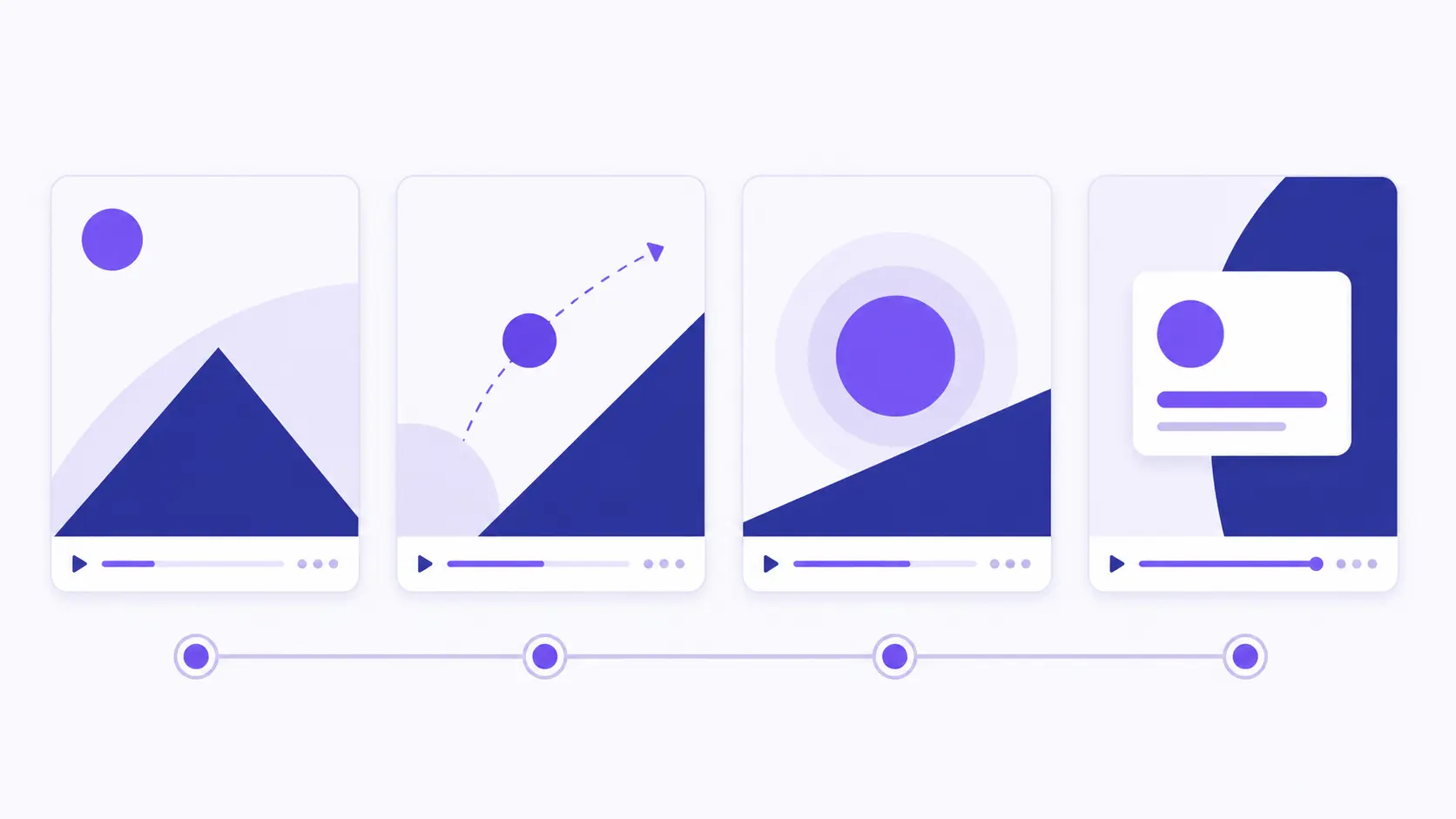
Four things, in order: a specific problem in the first five seconds, a clear statement of what you’re offering, one piece of proof, and a single call to action. Videos that convert follow that shape almost without exception, regardless of budget.
Where most promos go wrong is the opening. A logo animation, a slow establishing shot, or a sentence about your company’s mission spends the only attention you’re guaranteed. Open on the viewer’s problem, stated in their words, and you’ve earned the next 10 seconds.
The proof step is the one people skip. A number, a customer name, a before-and-after, a screenshot of the result. It doesn’t need to be a full testimonial. It needs to be something a skeptical viewer can’t dismiss as a claim.
And one call to action, not three. “Sign up, or follow us, or check out the blog” converts worse than any one of those on its own.
How Long Should a Promo Video Be?
Fifteen to 60 seconds for social and ads, up to 90 seconds on a landing page where the viewer arrived deliberately. Shorter than 15 and you can’t fit proof. Longer than 90 and you’re relying on interest you haven’t earned yet.
Length should follow placement rather than ambition:
| Where it runs | Length | Why |
|---|---|---|
| Paid social | 15 to 30 sec | You’re interrupting. Be quick. |
| Organic social | 20 to 60 sec | Completion rate drives reach. |
| Landing page | 60 to 90 sec | They came looking. Room for proof. |
| Under 30 sec | The click already happened. Don’t waste it. |
If your script won’t fit, cut the feature list rather than the proof. Features are the easiest thing to lose and the hardest thing to give up.
Five Promo Formats That Suit Small Teams
None of these need a crew, a studio, or anyone on camera. Each one can be built in the promo video creator, and Pictory Academy walks the workflow in how to create marketing and ad videos.
Product walkthrough
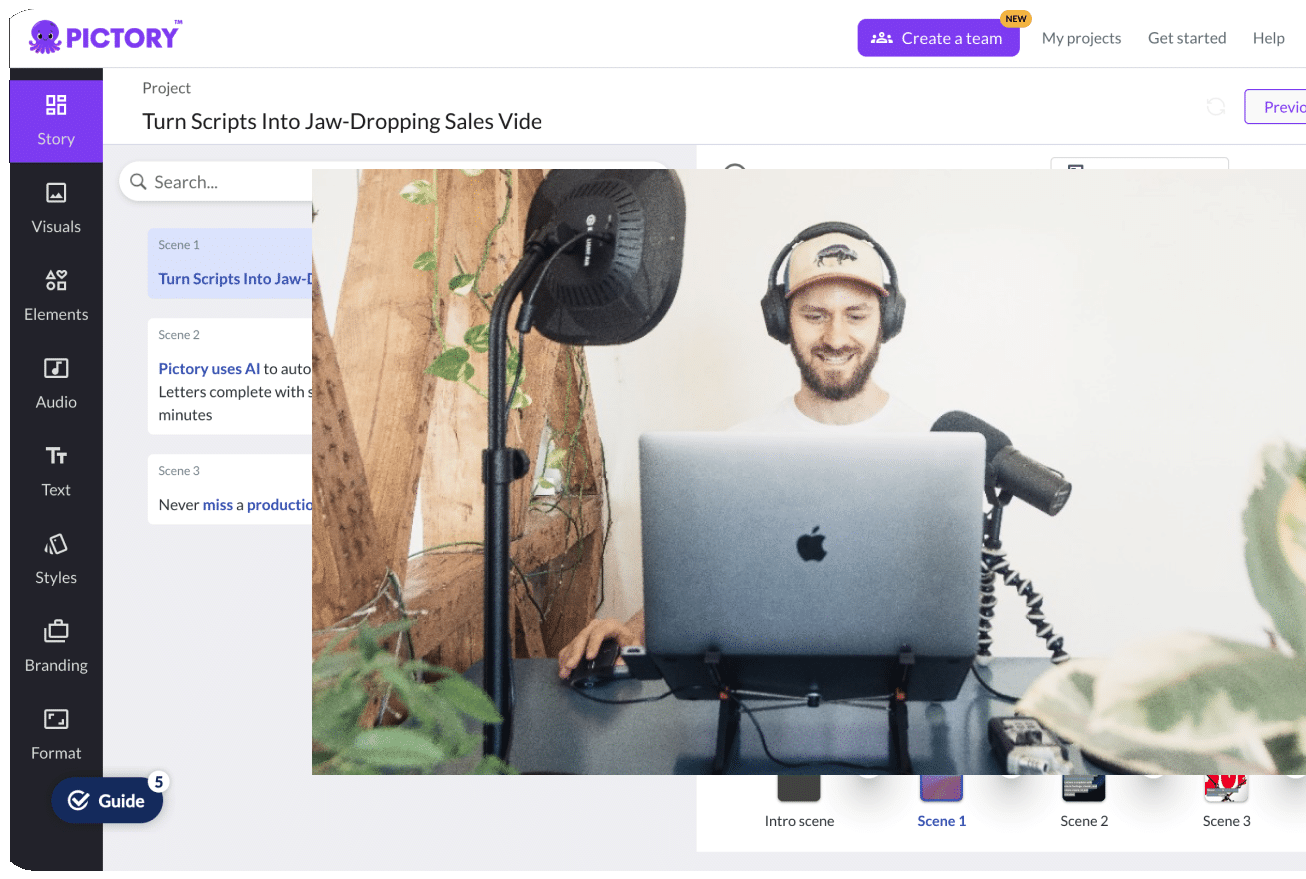
Screen recording plus voiceover. The strongest format for software, because it shows the thing working instead of describing it.
Before and after
Show the painful old way, then the new one. Works whenever the improvement is visible.
Customer quote over b-roll
You don’t need a filmed interview. A real written quote on screen, over relevant footage, carries most of the credibility.
Countdown or offer
For time-limited campaigns. Lead with the deadline, not the discount, and keep it to 15 seconds.
Event or webinar promo
Speaker, topic, date, register. Four beats, 20 seconds, and the details on screen as text so people can screenshot it.
How Do You Write a Promo Video Script?
Write the call to action first, then work backwards. Once you know the action, every earlier line has a job: get the viewer to the point where that action makes sense. Most people write forwards and end up with a video that describes a product and asks for nothing. If you want a draft to react to, Pictory Academy covers how to use the AI script generator.
Write the ask
One action, in the viewer’s language. “Start your free trial,” not “learn more about our platform.”
Write the hook
One sentence naming a problem your viewer had this week. Read it out loud, then cut it in half.
Fill the middle with one claim and one proof
What you do, then evidence it works. Resist adding a second claim. That’s what the landing page is for.
Mark the visual beside every line
Each sentence needs something to look at. If a line has no possible visual, it’s probably an abstraction and should be rewritten.
Time it before you build it
Read the script aloud at a natural pace. Roughly 150 words per minute. If it runs long, cut features before proof.
Step four is the one that saves the most time. Marking visuals against your script is the same job as building a shot list, and Pictory Academy covers the fastest way to do it in how to use the stock library. Doing it at the script stage stops you hunting for footage while the deadline runs down.
Where Should You Publish a Promo Video?
Wherever the action happens, and in the right shape for that place. The same promo needs a vertical cut for social, a landscape version for a landing page or email, and often a square variant for feeds. Same script, three exports.
Two habits make this manageable. Build in the aspect ratio you’ll use most, then re-export the others rather than redesigning. And keep your text in the center of the frame so a vertical cut doesn’t lose it. Pictory Academy covers the mechanics in how to change aspect ratios.
One thing worth planning for: most social video plays muted. If your promo only works with sound on, it doesn’t work. Captions aren’t an accessibility add-on here, they’re the primary channel.
Turn your script into a promo today
Footage, voiceover, captions, and branding in one pass. Every aspect ratio.
Verdict: What Actually Moves the Number
The hook and the call to action. If you have one afternoon, spend it on those two lines and accept that the middle is adequate. A promo with a sharp opening and a clear ask beats a beautifully produced one that opens on a logo and closes on “learn more.”
Production value matters least of the variables you control. Viewers forgive stock footage and synthetic voiceover in a promo. They don’t forgive being asked for something before they understand why. That’s a scripting problem, and it’s free to fix.
Make two versions and run them against each other. Same script, different hooks. You’ll learn more from one week of that comparison than from any amount of advice about what makes promos convert, including this page.
Build both versions this afternoon
One script, two hooks, every aspect ratio the placement needs.
FAQ: Promo Video
What is a promo video?
A promo video is short marketing video built to drive one specific action, like signing up or registering. It differs from an explainer, which teaches a concept, and from a brand film, which builds awareness. A promo asks the viewer to decide something.
How long should a promo video be?
Fifteen to 60 seconds for social and ads, up to 90 on a landing page where the viewer arrived deliberately. Shorter than 15 seconds leaves no room for proof. Longer than 90 relies on attention you haven’t earned. Match length to placement, not ambition.
How much does a promo video cost?
Anywhere from nothing to five figures. An agency-produced promo with a shoot runs into thousands. Built in-house from a script, stock footage, and AI voiceover, the cost is your time plus a software subscription. For most campaigns the second option tests faster.
Do you need a voiceover in a promo video?
Not always. Text on screen over footage works well for social, where most viewing is muted anyway. A voiceover helps on landing pages and email, where sound is more likely to be on. If you use one, add captions regardless.
What’s the difference between a promo video and an explainer?
Intent. An explainer builds understanding of how something works and can take two minutes. A promo asks for an action and usually has under 60 seconds to do it. Trying to do both in one video normally means doing neither well.
Keep reading
The line-by-line version of the script method above.
When the promo is going into a paid placement.
The longer format for when one action is not enough.